
WIVICS PANEL SOLUTIONS / APPLICATION GUIDE
Custom Project Applications
From material properties to purpose-built products.
Explore how compact laminate panels can be developed into custom components for marine interiors, service environments and specialised projects. WIVICS coordinates material selection, geometry, fabrication and assembly around the intended use.
01 / Material to component
Properties That Shape the Product
Product development starts with the way a component will be used. Material characteristics inform the panel geometry, support arrangement, surface selection and fabrication details.
Solid compact construction
Configure tabletops, doors, shelves and side panels as coordinated product components, with thickness and support matched to their role.
Moisture-resistant material
Develop furniture components for humid and splash-prone settings, coordinating joints, hardware and cleaning access with the selected panel grade.
Durable working surfaces
Match surfaces to repeated handling, contact and cleaning in service environments.
CNC-machined geometry
Shape outlines, handholds, slots and equipment openings while using the exposed core as part of the finished design.
Exterior exposure and specialised chemical contact inform grade and surface selection.
02 / Marine applications
Marine & Onboard Components
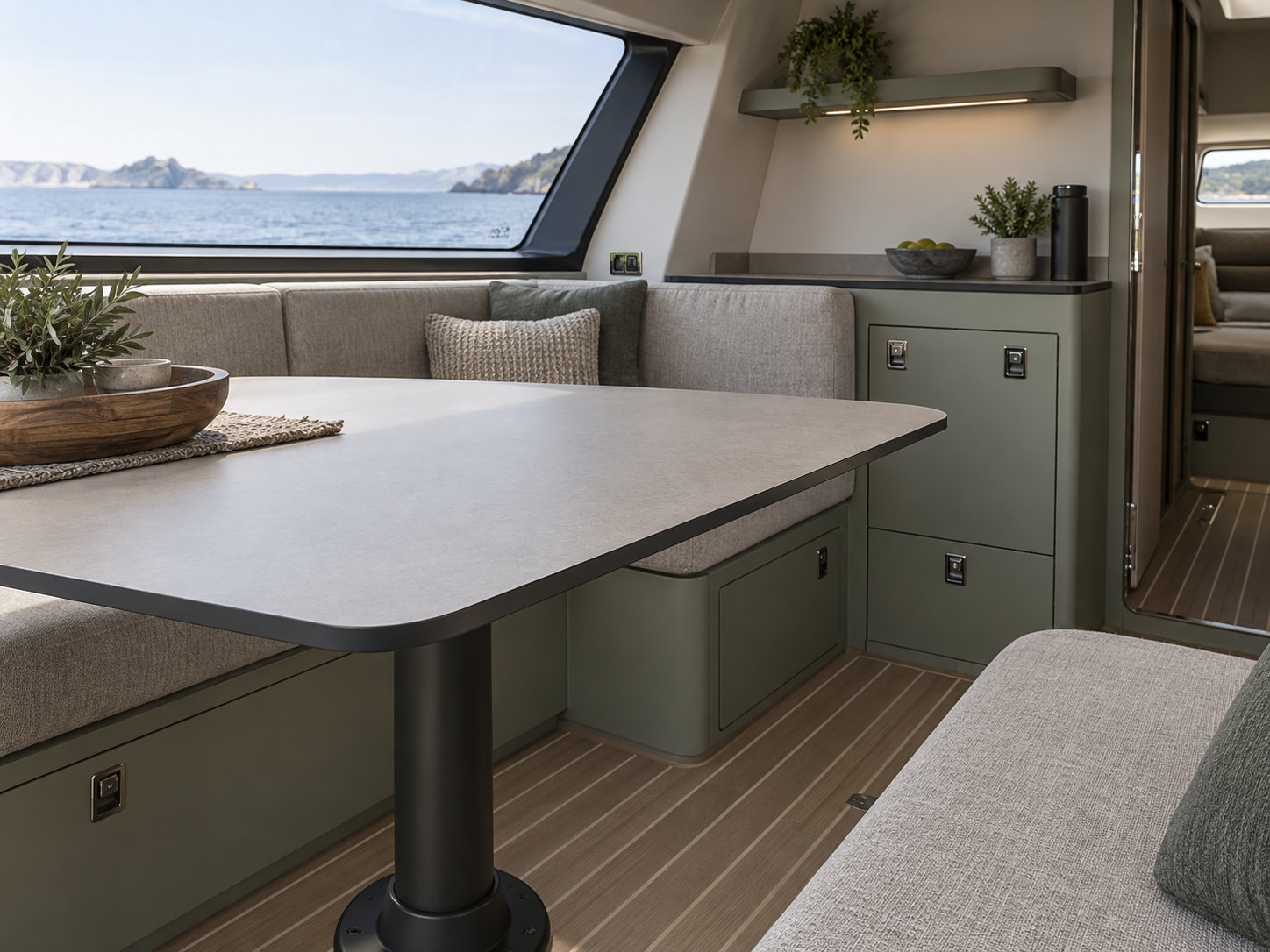
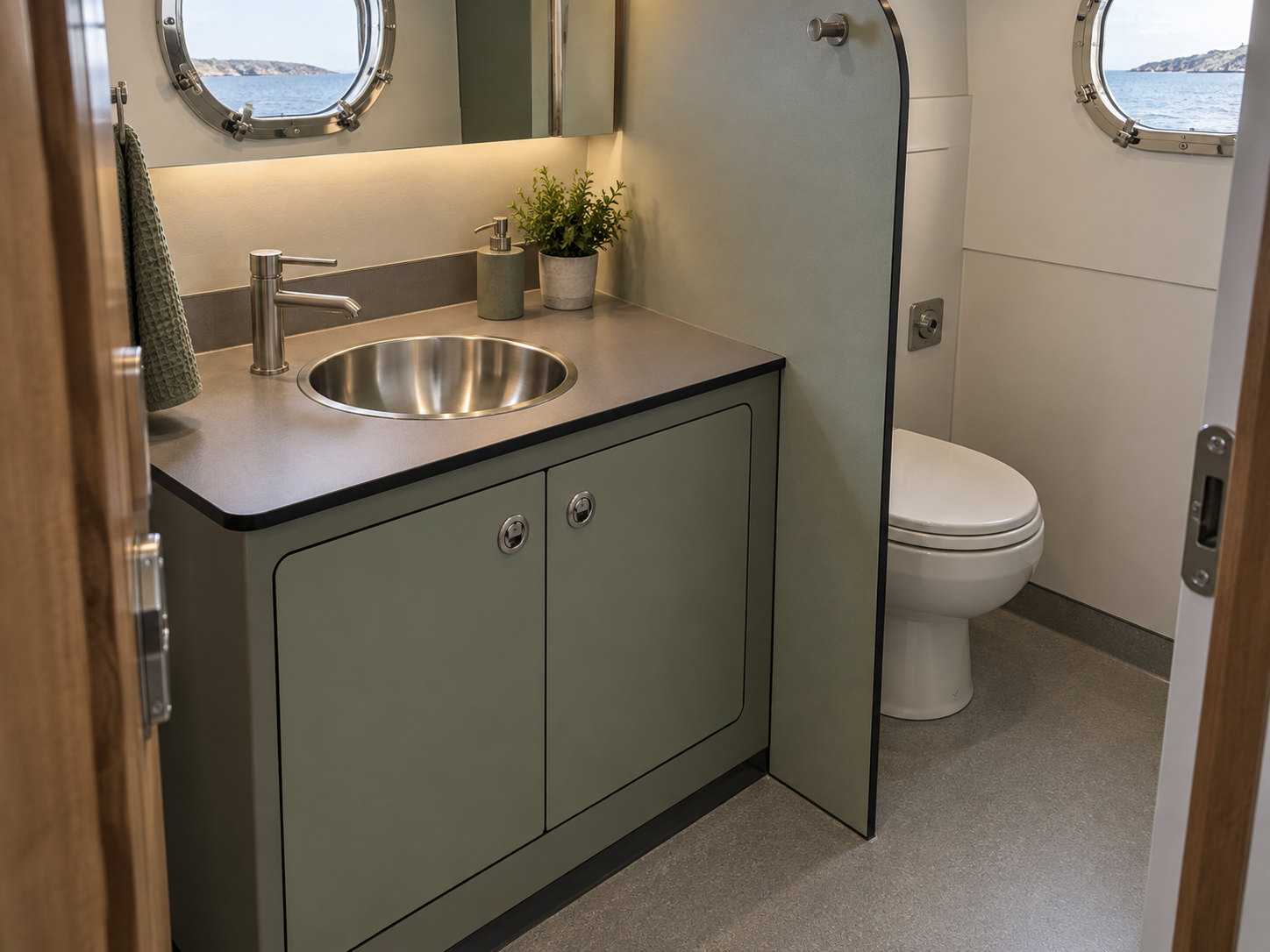
Compact laminate components can be configured for cabin tables, storage doors, partitions and vanity modules. Product development brings together confined-space geometry, humid conditions, access and secure assembly.
- Cabin furniture
- Tables, shelves and storage fronts sized around the available space.
- Wet-area modules
- Vanity tops, cabinet panels and partitions coordinated with fixtures and cleaning access.
- Service components
- Replaceable panels and storage elements for onboard service areas.
Design focusCoordinate component weight, support, fixing access, latches and vibration conditions with the vessel interior requirements. Select the material grade and documentation for the intended location.
03 / Custom product concepts
Purpose-built Product Concepts
Explore configurations shaped around service tasks, available space and the intended exposure.
Industrial Service Modules
- Use
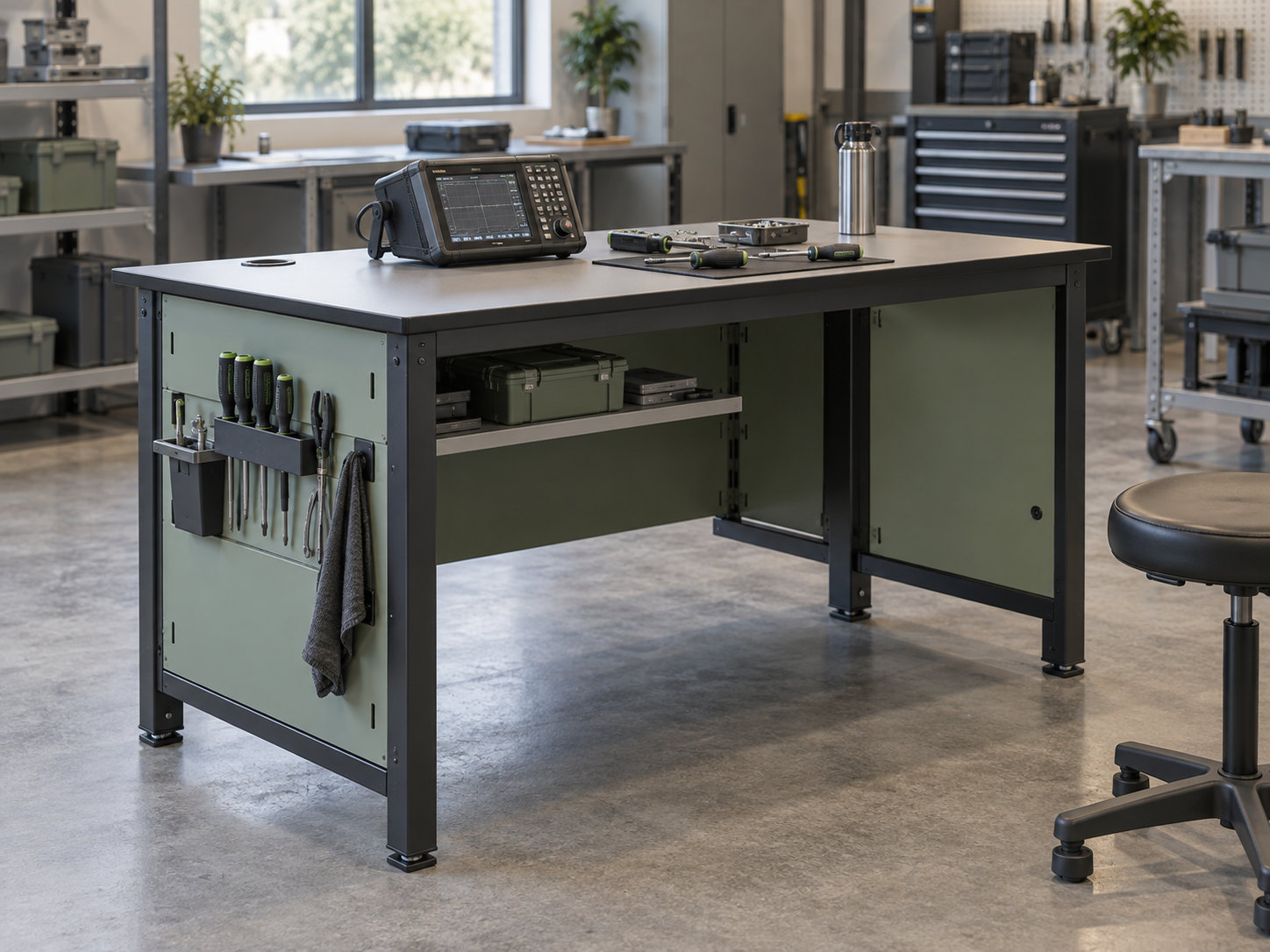
- Work surfaces, tool storage and equipment support furniture.
- Material fit
- Compact panel components with machined openings and exposed edges.
- Design focus
- Load paths, metal support frames, service access and replaceable parts.
Mobile Service Interiors
- Use
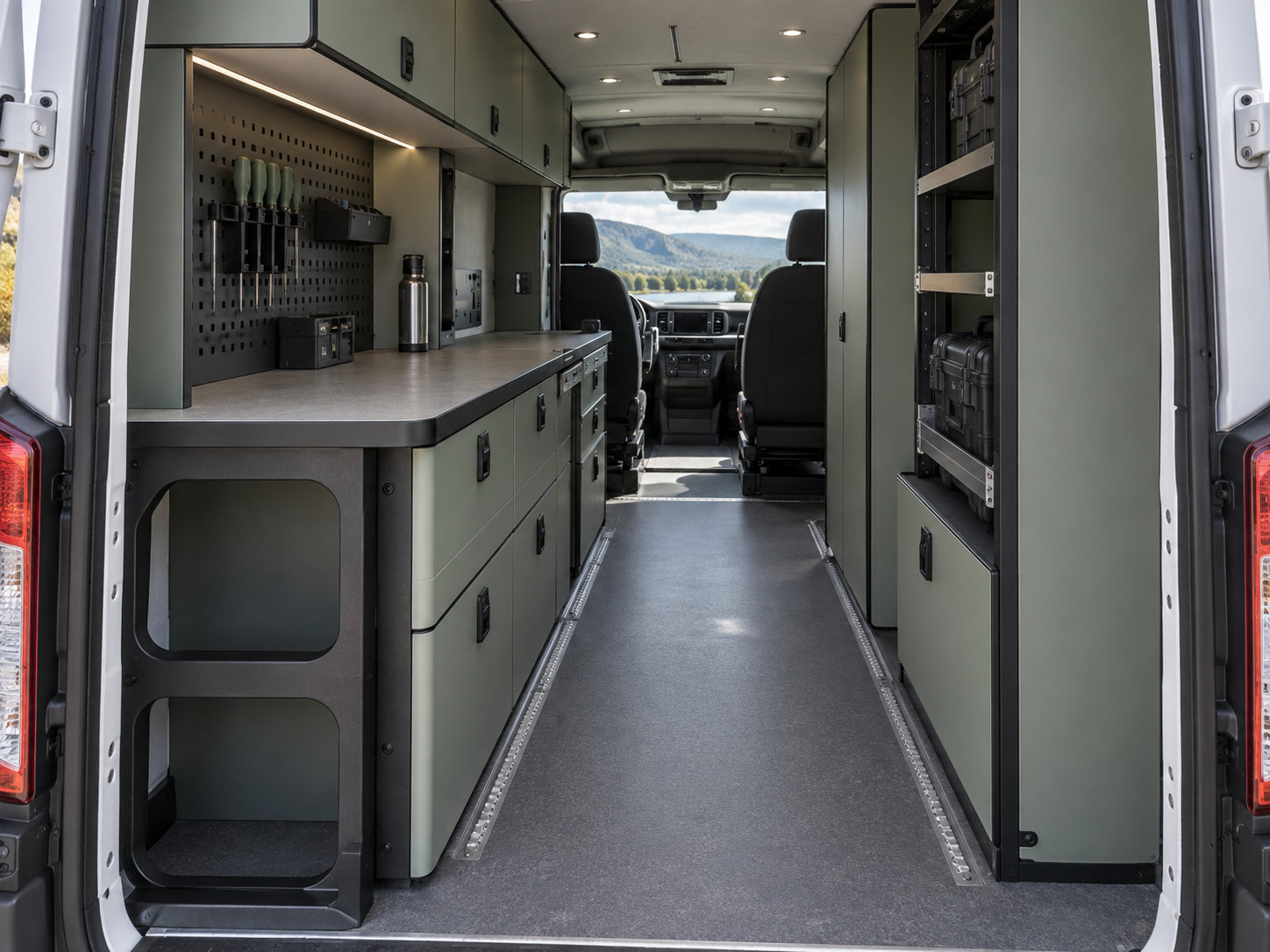
- Fitted storage and work modules for field-service vehicles.
- Material fit
- Custom-sized panel parts with integrated handholds and equipment openings.
- Design focus
- Component weight, anchoring, latches and access within a confined layout.
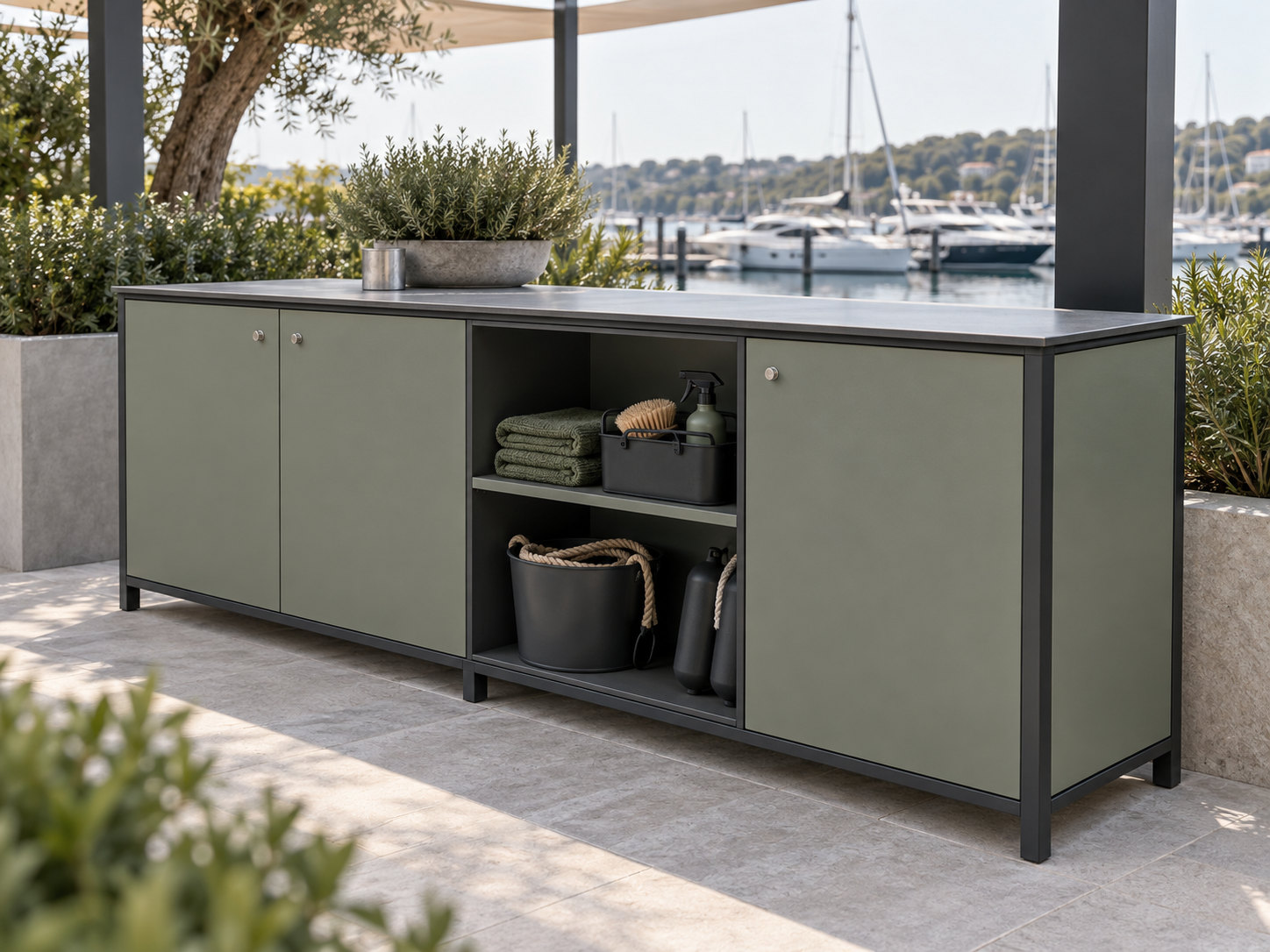
Outdoor Service Storage
- Use
- Storage and service counters for marina and shared outdoor settings.
- Material fit
- Exterior-grade panels selected for the intended exposure.
- Design focus
- Frame interfaces, drainage, movement allowances and maintenance access.
04 / Component development
Geometry, Edges & Connections
Machined geometry & exposed edges
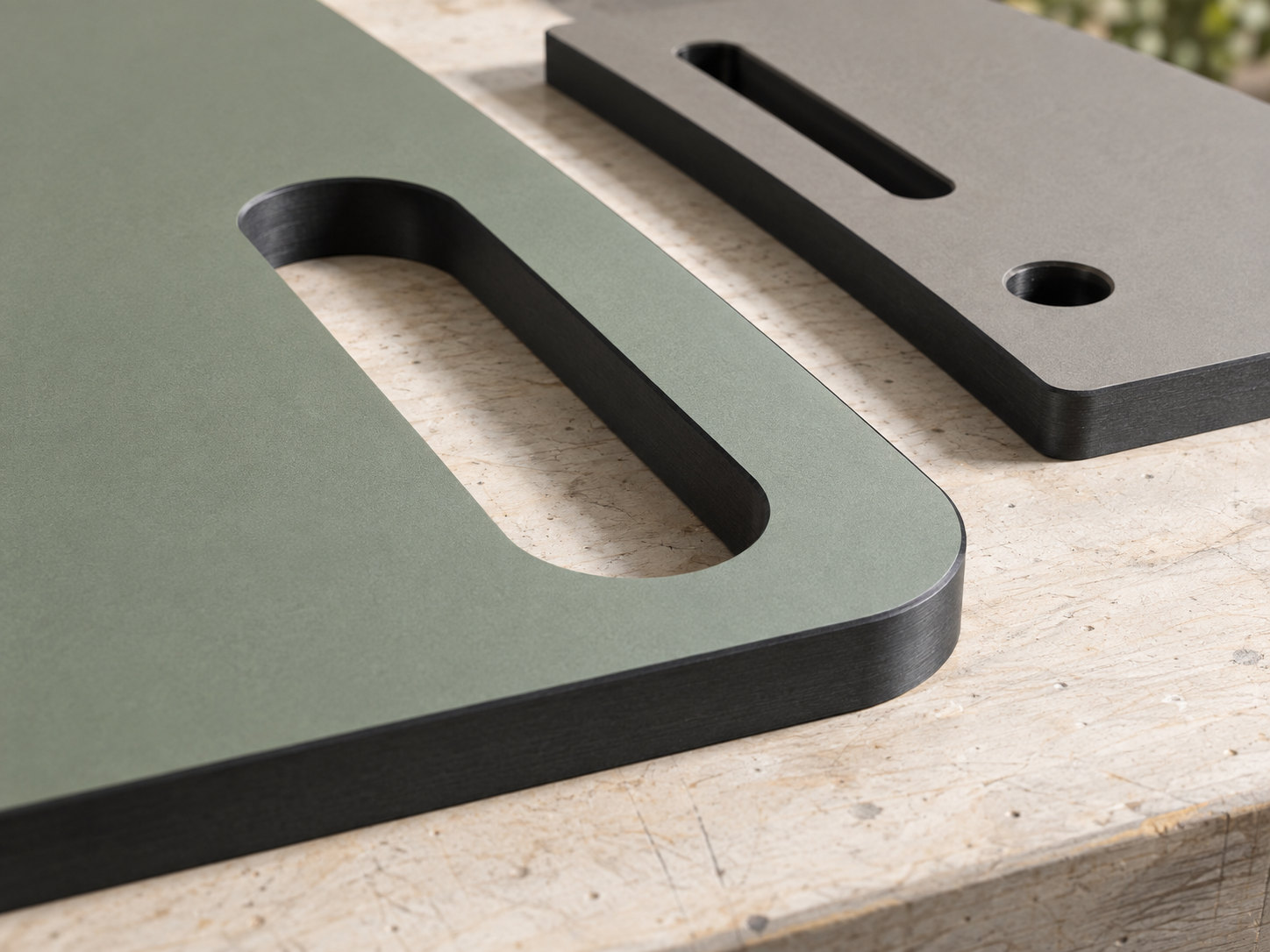
Custom outlines, rounded corners, handholds and slots turn a flat panel into a product-specific component. The visible dark core and finished edge profile form part of the design, with machining details coordinated on the component drawings.
Assembly & replacement
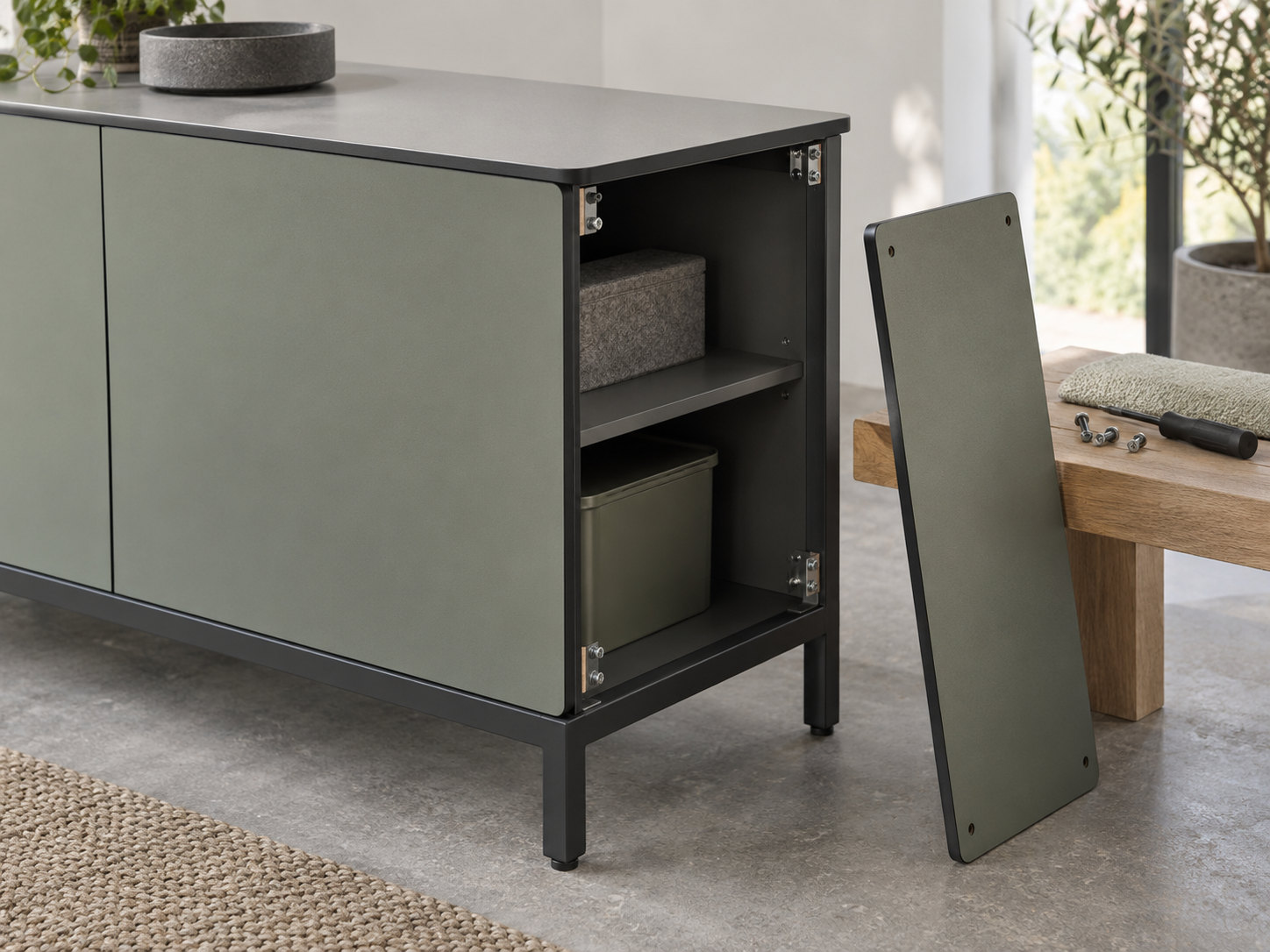
Panel dimensions, brackets, hardware preparation and assembly access are coordinated as one system. Replaceable components can support servicing and product updates when connections and removal sequences are considered from the start.
Smaller components such as organisers and trays can also be developed from suitable offcuts through considered part sizing and cutting layouts.
05 / Application engineering
From Brief to Prototype
WIVICS coordinates project conditions, fabrication, assembly and documentation through a considered development process.
Define the use
Location, users, exposure, function and expected quantity.
Select the configuration
Panel grade, thickness, finish and support concept.
Develop the components
Geometry, openings, edge profiles and hardware interfaces.
Build the prototype
Review fit, access, assembly and the finished appearance.
Review & prepare supply
Confirm the agreed checks, drawings and production information.
Discuss Your Custom Project
Share the intended use, dimensions or drawings, exposure conditions, preferred finish and expected quantity. WIVICS will review the material, fabrication and assembly considerations with you.